
By Tim Trevathan | Atlanta Real Estate Agent | 770-906-0748
If you’re thinking about moving to the Atlanta metro area and you have a connection to Korean culture — whether you’re Korean-American, a K-culture enthusiast, or someone who just wants to be immersed in one of the most vibrant ethnic communities in the entire United States — then let me tell you something: Duluth, Georgia should be at the very top of your list.
I say that not just as a real estate agent, but as someone who has personally lived in Seoul, South Korea for five years, taught English there, and came back to the United States specifically because Duluth felt like the closest thing to home outside of Korea. I am half Korean and half Caucasian, and growing up between two worlds meant finding a place where both identities could thrive simultaneously. Duluth gave me exactly that. And it can give you that too.
So let me walk you through everything — the demographics, the income levels, the job opportunities, the businesses, the churches, the events, the festivals, and the community culture — because if you’re seriously thinking about planting your roots here, you deserve the full picture.
The Big Picture: Why Duluth Is the Heart of Korean America in Georgia
Duluth, Georgia sits about 25 miles northeast of Downtown Atlanta in Gwinnett County, and it holds a distinction that very few cities in America can claim: it has the highest concentration of Korean Americans in the entire state of Georgia. In fact, the Duluth area consistently ranks in the top three cities in the entire country for Korean population density.
According to the U.S. Census Bureau’s 2022 American Community Survey, Duluth has a population of approximately 32,350 people, with Asian Americans making up 23.1% of all residents. When you zoom out to Gwinnett County — which includes Duluth and its neighboring cities like Suwanee and Norcross — the picture becomes even more striking. Gwinnett County is home to nearly 30,000 Korean Americans, representing approximately 47% of all Korean residents in the entire state of Georgia.
Georgia overall is home to an estimated 150,000 Korean Americans and Korean immigrants, making it one of the most significant Korean communities outside of California and New York. And Korean is officially the third most spoken language in Georgia, ranking only behind English and Spanish. Let that sink in for a moment.
What’s driving this migration? As Judy Yi, program director of the nonprofit Center for Pan Asian Community Services, explained it: there’s a running joke in the Korean community — “If you got your house in L.A. and you sell your business in L.A., you can come to Atlanta and buy a house and two businesses.” The lower cost of living, the welcoming community infrastructure, and the already-established Korean ecosystem have made Duluth an irresistible destination for Koreans relocating from New York, Los Angeles, and Chicago. The opportunity here is real, and it’s growing.
Demographics and Income: A Community Built for Success
The numbers behind Duluth’s Korean community tell a powerful story of economic strength and educational achievement.
Duluth’s median household income sits at $88,915 — significantly higher than the Atlanta metropolitan region median of $82,625 and well above the national median of $75,149. This is a community of upwardly mobile, economically active residents who have invested heavily in their corner of Georgia.
Perhaps even more impressive is the educational profile. 53% of Duluth residents age 25 and older hold a bachelor’s degree or higher — compared to just 38.9% in Gwinnett County overall, 41% across metro Atlanta, and 34.3% nationally. This is a highly educated, skilled workforce, and the Korean community is a major driver of that distinction.
Nearly 30% of Duluth’s residents were born outside the United States, and of those foreign-born residents, 61.6% emigrated from Asia, with a substantial portion hailing directly from South Korea. This is a city that has truly been shaped and enriched by its Korean population — not just culturally, but economically and politically as well.
Koreatown: Where It Lives and Breathes
When people think of a “Koreatown,” they often imagine a small, concentrated pocket of a city. In Duluth, that picture is completely different. The Korean commercial corridor here is sprawling and dynamic, stretching across major arterial roads including:
- Pleasant Hill Road (described by Duluth’s own economic development manager as “probably the most dynamic retail business area in the state of Georgia for Korean-owned businesses”)
- Satellite Boulevard
- Peachtree Industrial Boulevard
- I-85 interchange corridors
The anchor of it all is Park Village Shopping Center, a massive retail complex that was nearly vacant just over a decade ago. Today, it is a thriving, one-stop destination featuring more than 50 Korean-owned and operated businesses. Walking through Park Village feels like stepping into a neighborhood in Seoul — except you’re in suburban Georgia.
Korean Businesses: Every Need, Every Convenience
One of the most remarkable things about Duluth’s Koreatown is its self-sufficiency. A native Korean speaker who arrives with zero English could genuinely build a full life here without ever feeling lost. That’s how complete this ecosystem is.
The range of Korean-owned and operated businesses includes:
- Law firms and accounting offices serving the Korean-American business community
- Korean-owned banks and financial institutions
- Jewelry stores (including Shilla Jewelry in Park Village)
- Used car dealerships and auto mechanics
- Dentists, doctors, and medical clinics with Korean-speaking staff
- Clothing and fashion boutiques
- Furniture stores
- Skincare and wellness shops
- PC game rooms (PC방) — a beloved staple of Korean entertainment culture
- K-pop merchandise stores
- Hair salons and barbershops
- Pet groomers
- Spas and jjimjjilbangs (찜질방) — traditional Korean-style saunas and bathhouses that are a deeply embedded part of Korean community life
And then there’s the food. The Korean culinary scene in Duluth is nothing short of extraordinary.
The Food Scene: A Korean Foodie’s Paradise
Korean BBQ has absolutely exploded in the Duluth area over the last decade, growing from a handful of restaurants to 15–20 Korean BBQ establishments in the corridor, with roughly half of those concentrated in Duluth itself. If you love the experience of grilling meat at your own table, chatting with friends over samgyeopsal and galbi, you will never run out of options here.
Beyond BBQ, the traditional Korean restaurant scene offers everything you could want:
- Gamjatang (spicy pork bone soup)
- Yukgaejjang (shredded beef and vegetable stew)
- Seollungtang (ox bone broth soup)
- Soondooboo (soft tofu stew)
- Kimbap, tteokbokki, and other beloved Korean street foods
Korean coffee shops and dessert cafes are equally vibrant. You’ll find specialty drinks, pastries, cakes, and the iconic bingsu (빙수) — Korean-style shaved ice — available throughout the community, served alongside classic Americanos, fruit juices, and teas.
H Mart, the nationally recognized Korean supermarket chain, operates a full-service Super H Mart in Duluth at the Park Village Shopping Center, where you can find every Korean ingredient, snack, drink, and pantry staple you could possibly need. It is a full experience and a community hub all its own.
Korean Churches: The Soul of the Community
For Korean-Americans, the church is far more than a place of worship — it is the cultural cornerstone of community life. Duluth and the surrounding Gwinnett County area are home to a large number of Korean Christian churches, spanning multiple denominations including Presbyterian, Baptist, Methodist, and non-denominational congregations.
These churches serve as social networks, business connection hubs, youth mentoring centers, and cultural preservation engines all in one. Many offer services in Korean, bilingual services, and robust youth programs that keep younger generations connected to their heritage. If faith is central to your life, you will find a welcoming spiritual home here.
Events and Festivals: Celebrating Korean Culture Year-Round
The Korean community in Gwinnett County doesn’t just live here — it celebrates here. There’s a rich and growing calendar of cultural events that bring together Korean-Americans and the broader community alike.
The Korean Festival, hosted by the Korean Festival Foundation, is one of the most significant annual events in the region. Held in Gwinnett County, it draws thousands of attendees over two days and features:
- Traditional Samul Nori percussion drum performances
- Hanbok (traditional Korean dress) fashion shows and history presentations
- K-Pop performances by local cover groups and featuring invited K-Pop artists
- Taekwondo demonstrations
- Korean calligraphy workshops
- Jegichagi (a traditional Korean kick game) for all ages
- Korean street food vendors and local restaurant booths
- Small business showcases highlighting Korean-American entrepreneurs
The festival has been running for over a decade (with a COVID-era interruption) and has resumed as an annual tradition since 2022. It is sponsored by the Consulate General of the Republic of Korea in Atlanta and the Korean American Chamber of Commerce — underscoring just how seriously this community takes its cultural preservation and celebration. Notably, Gwinnett County holds an official Sister Partnership with the Gangnam district of Seoul, cementing the deep ties between this Georgia suburb and South Korea itself.
K-Pop MiniCon is another community highlight, held at the Gas South Convention Center right in Duluth — a full-day event featuring Korean dance instruction, music, K-Pop merchandise, fashion, and media. It has grown dramatically in attendance as Korean pop culture has gone increasingly mainstream across the United States.
Explore Gwinnett, the county’s tourism and destination marketing organization, has been running Korean food and culture tours for over a decade, and demand for those tours has never been higher.
Job Opportunities: A Thriving Korean Business Economy
For those considering not just where to live but where to work or run a business, Duluth’s Korean community opens doors across multiple sectors:
- Small business ownership — the ecosystem here is extraordinarily supportive for Korean entrepreneurs, with established networks through the Korean American Chamber of Commerce
- Healthcare — local hospitals have responded to the Korean population boom by actively recruiting Korean-speaking staff and administrators
- Legal and financial services — with such a large immigrant and first-generation population navigating legal, tax, and real estate matters, Korean-speaking attorneys, CPAs, and financial advisors are in high demand
- Education — Korean language schools, tutoring centers, and daegyo (대교) programs serve families throughout the area
- Retail and hospitality — the sheer volume of Korean businesses creates a continuous job market in customer-facing roles
- The arts and media — Atlanta Radio Korea and Korea Daily both serve as local Korean-language media outlets
The city of Duluth itself has shown remarkable responsiveness to its Korean community. The formation of the Korean Task Force — led by city officials including Duluth’s first Korean-American associate judge — demonstrates that local government is actively working to support and include Korean residents and business owners in civic life.
Living Here: What the Real Estate Market Looks Like
Now that you know what makes Duluth’s Koreatown so special, the next question is: what does it look like to actually buy a home here?
Duluth offers a range of housing options — from established single-family neighborhoods and newer construction subdivisions to townhomes and condominiums. Its location along major corridors like I-85 provides convenient access to Tech Corridor employers, Midtown Atlanta, and Hartsfield-Jackson Atlanta International Airport.
The quality of Gwinnett County Public Schools is a strong draw. Duluth residents are zoned for Duluth High School or Peachtree Ridge High School, and the county is home to the Gwinnett School of Mathematics, Science, and Technology, ranked the #1 high school in Georgia and #9 in the nation.
Whether you’re a first-time buyer, relocating from another Korean-American community, or upgrading from a rental, this is a market where having a knowledgeable, locally-connected agent makes all the difference.
Ready to Make Duluth Your Home?
I’ve spent years living and working in this community — quite literally. I moved here after five years in Seoul because Duluth felt like the place where my Korean identity and my life in America could meet in the middle. And I help people find that same feeling every single day through real estate.
If you’re thinking about moving to the Atlanta area and want to explore what Duluth, Georgia and its incredible Koreatown have to offer, let’s talk. I know these streets, these neighborhoods, these communities, and I am ready to help you find exactly the home that fits your life.
📞 Call or text me: 770-906-0748 📧 Email me: [email protected] 🌐 Visit: timtrevathanhomes.com
Duluth-ae no lo oh say yo — see you in Duluth! 🇰🇷🏠
Tim Trevathan is an Atlanta-area real estate agent specializing in relocations to Gwinnett County and the greater metro Atlanta area. Half Korean and a former English teacher in Seoul, Tim brings a firsthand cultural perspective to helping Korean-American buyers find their perfect home in Georgia.
Photos of Koreatown in Duluth:
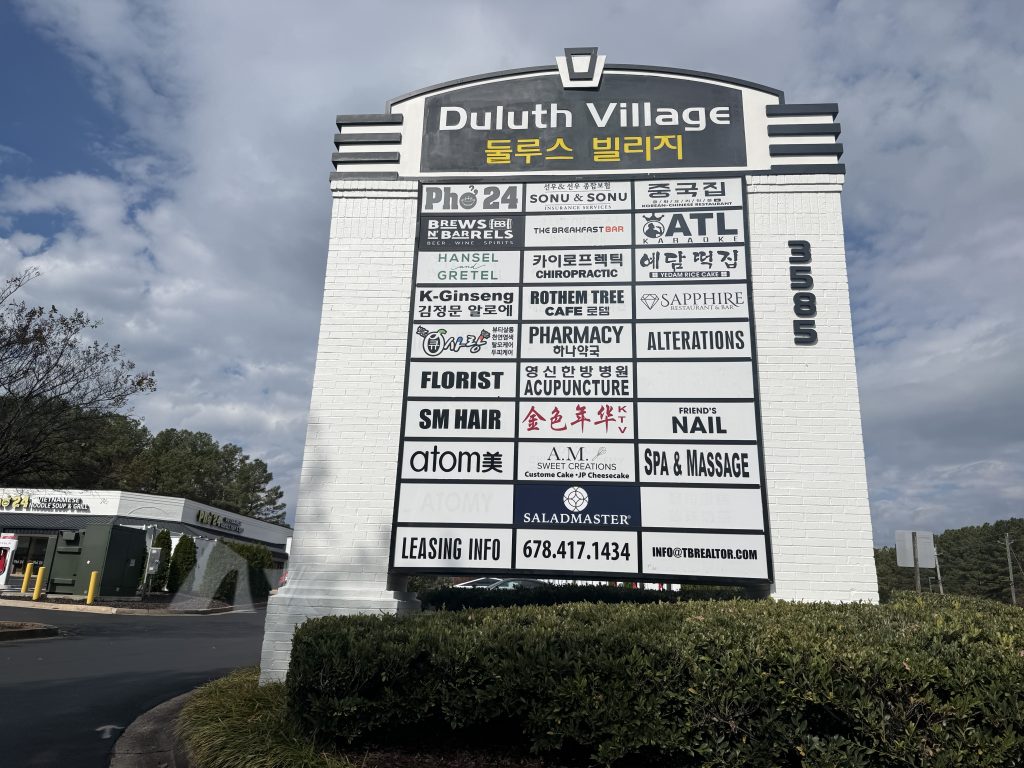
This is Duluth Village at 3585 Peachtree Industrial Blvd.

This is Hansel & Gretel Bakery Café – Peachtree, located in Duluth Village at 3585 Peachtree Industrial Blvd.
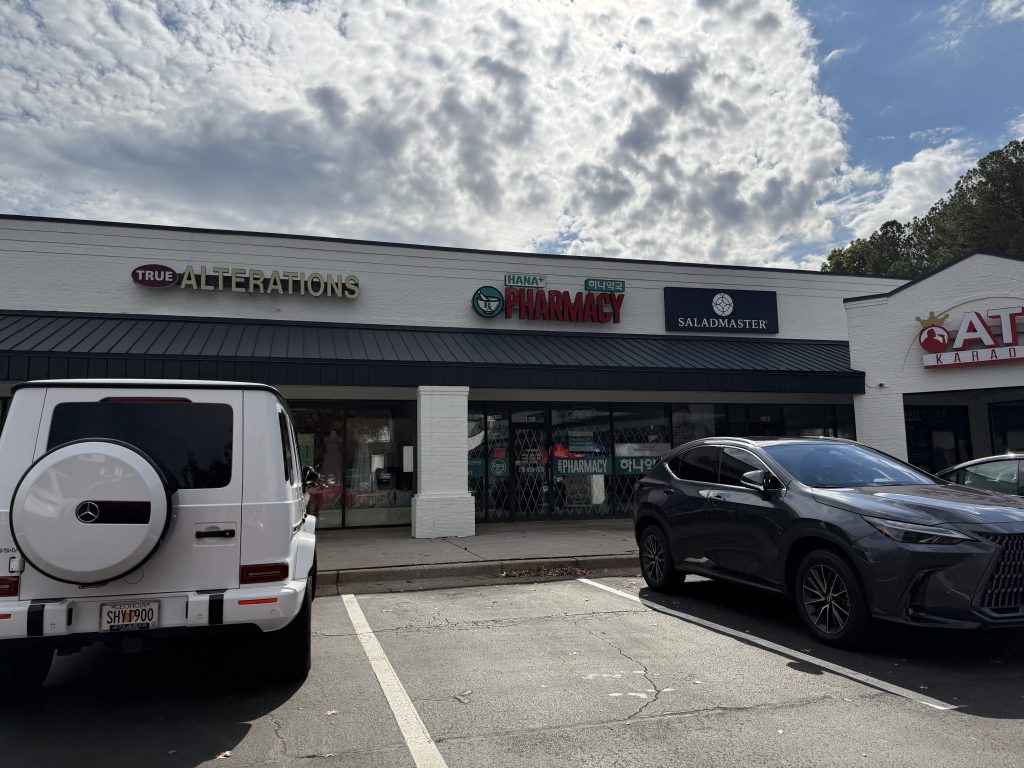
This is Hana Plus Pharmacy (Korean Pharmacy), located in Duluth Village at 3585 Peachtree Industrial Blvd.

These are Hana Pharmacy, Saladmaster, and ATL Karaoke, located in Duluth Village at 3585 Peachtree Industrial Blvd.

These are Atomy and K-Ginseng, located in Duluth Village at 3585 Peachtree Industrial Blvd.

These are Zoong Guk Jib and Acupuncture Korea, located in Duluth Village at 3585 Peachtree Industrial Blvd.

These are Breakfast Bar and Flower Talk, located in Duluth Village at 3585 Peachtree Industrial Blvd.

This is Cafe Rothem, located in Duluth Village at 3585 Peachtree Industrial Blvd.

These are Zoong Cukjib Korean-Chinese Restaurant and Ying Gift Shop, located in Duluth Village at 3585 Peachtree Industrial Blvd.

These are Yedam Rice Cake and Sonu & Sonu Insurance Service, located in Duluth Village at 3585 Peachtree Industrial Blvd.

This is Zion Market, located at 2340 Pleasant Hill Rd.

This is Kang’s Kitchen BBQ, located at 2255 Pleasant Hill Road.

These are Nvague Hair Salon and Chung Ki Wa Korean BBQ, located at 2255 Pleasant Hill Rd.

This is the commercial building located at 2255 Pleasant Hill Rd.

This is Chubby Cattle, located at 2275 Pleasant Hill Rd.

This is the commercial property located at 2476 Pleasant Hill Rd.

These are E.M. Bop Korean BBQ and Busan Daegee Gukbap, located at 2442 Pleasant Hill Rd.

This is the commercial property located at 2476 Pleasant Hill Rd.

This is Gohan buffet, located at 2205 Pleasant Hill Rd

This is Jeju Sauna & Wellbeing, located at 3555 Gwinnett Pl Dr.

This is Jeju Sauna & Wellbeing, located at 3555 Gwinnett Pl Dr.

This is Soban Korean Restaurant, located at 3490 Gwinnett Place Dr.

This is Seo Ra Beol KBBQ, located at 3040 Steve Reynolds Blvd.

This is Naju Myunok, located at 3505 Gwinnett Pl Dr.

This is Naju Myunok, located at 3505 Gwinnett Pl Dr.

These are Park Jun’s Beauty Lab and Galleria Boutique, located at 2472 Pleasant Hill Rd.

 EN
EN
 KO
KO