
By Tim Trevathan | Atlanta Real Estate Agent | 770-906-0748
If you are thinking about moving to Atlanta and you have even the slightest connection to Korean culture — whether you were born in Korea, grew up Korean-American, married into a Korean family, or simply fell in love with K-pop, Korean BBQ, and the warmth of this extraordinary community — then there is one city I need you to know about before you make any decisions: Doraville, Georgia.
Doraville is not a well-known name like New York’s Koreatown or Los Angeles’s K-town. But what it lacks in fame, it makes up for in depth, history, and authenticity. This is where Atlanta’s Korean story began — not in the suburbs, not along a brand-new commercial corridor, but right here along the iconic Buford Highway in DeKalb County, where Korean immigrants first planted their roots in the 1960s and built something lasting that exists to this day.
I have spent years immersed in Atlanta’s Korean communities — I am half Korean myself, and I lived and worked in Seoul, South Korea for five years before coming back to the Atlanta metro area. I know what it feels like to search for a home that honors both your identity and your practical needs. And when it comes to Doraville, I can tell you with complete confidence: this place is something special.
Let me walk you through everything — the demographics, the income landscape, the job opportunities, the businesses, the churches, the festivals, the community organizations, and the real estate market — because if you are serious about planting your roots near Atlanta’s Korean community, Doraville deserves your full attention.
A City Built on Diversity: Doraville’s Demographics
Doraville sits just northeast of downtown Atlanta in DeKalb County, covering approximately 3.6 square miles — a compact but vibrant city with a population of around 10,600 residents. What sets Doraville apart is the sheer scale of its international character. Nearly half of all Doraville residents were born outside the United States. Over 20% of the population identifies as Asian, with Korean, Chinese, and Vietnamese communities all represented. And in a city of just over 10,000 people, approximately 56% speak a language other than English as their first language.
The city has a notably youthful profile. The median age in Doraville is just 29.9 years — making this one of the youngest communities in the greater Atlanta metro area. The household composition reflects that energy, with an average household size of 3.6 people and a slight male majority (56% male, 44% female). This is not a retirement community. This is a place where people are building careers, raising children, starting businesses, and investing in their futures.
The Korean-American presence runs deep through Doraville’s DNA. Korean businesses line the Buford Highway corridor, Korean-language signage appears throughout the commercial strip, and long-established community networks give new arrivals an immediate sense of belonging. Korean is not a novelty here — it is woven into the fabric of daily life.
The Story of Koreans on Buford Highway: Where It All Started
To understand Doraville’s Korean community, you have to understand Buford Highway.
Buford Highway is a six-mile commercial corridor — sometimes called the “International Corridor” — that runs through DeKalb County, passing through Doraville, Chamblee, and Brookhaven. In the 1960s and 1970s, it was an unremarkable suburban strip of used car lots and fast-food restaurants. That changed dramatically beginning in the late 1970s and accelerating through the 1980s and 1990s as wave after wave of immigrants — Korean among them — arrived in Atlanta, attracted by cheap commercial real estate, reliable traffic, and proximity to the city.
Koreans began arriving in Atlanta in the 1960s — drawn by job opportunities, affordable housing, and access to higher education at world-class institutions like Georgia Tech and Emory University. They settled along the Buford Highway corridor in Doraville, opening businesses that still exist today. As successive generations came, markets opened, Korean churches sprang up, restaurants spread, and a complete community ecosystem took root. This was Koreatown before Koreatown had a name.
As you drive north along Buford Highway through Doraville, you begin to see the Korean and Japanese signage mixing in with Spanish, Vietnamese, and Chinese — a visual testament to the layers of community that have built up over decades. It is, as the DeKalb History Center describes it, a “beacon speaking to new arrivals in their own language” and a reflection of the vitality of these communities for longtime residents.
No suburb in America tells the story of Korean immigration quite the same way Doraville does. This is where the foundation was laid.
Income Levels and Economic Profile
Doraville’s economy reflects its working immigrant heritage. It is a city of entrepreneurs and small business owners, of hardworking first-generation strivers and upwardly mobile second-generation professionals. The Korean community in particular has contributed significantly to the local commercial vitality along Buford Highway.
Doraville’s housing market is notably accessible compared to the broader Atlanta metro area, making it an attractive entry point for buyers looking to be close to the Korean community infrastructure without paying suburban premium prices. The city offers a mix of mid-century homes, modest ranch-style houses, and newer infill properties — all with genuine competitiveness in price compared to the newer suburbs farther north.
For Korean buyers specifically, Doraville represents something priceless: a community where your cultural identity is mirrored around you — in the grocery store, at the restaurant, at church, and in the professional services sector. You can see a Korean-speaking dentist on Buford Highway. You can hire a Korean attorney or Korean CPA just minutes from your front door. You can do all of your weekly shopping, banking, and medicine without ever needing to navigate a language barrier.
Korean Businesses on Buford Highway: An Entire World on One Road
The Korean commercial ecosystem along Buford Highway in Doraville is genuinely remarkable. Whether you have just arrived from Seoul or have been in the U.S. for twenty years and want the comfort of familiar culture, you will find it here.
Korean Restaurants: The dining scene along Buford Highway in Doraville is deep, diverse, and deeply authentic.
- Hae Woon Dae BBQ / Kalbi (5805 Buford Hwy NE) — Now rebranded as Kalbi, this is one of America’s original Korean barbecue pioneers, founded in 1989 and still operating from the same location over 35 years later. Same family. Same recipes. Same fire. This is Atlanta’s most storied Korean BBQ.
- Han Il Kwan (5458 Buford Hwy NE) — A beloved, well-established Korean restaurant serving authentic traditional dishes including bibimbap, bulgogi, kimchi stew, and more. Known for its flavorful, home-style cooking and welcoming atmosphere.
- KPOP BBQ and Bar (5211 Buford Hwy NE) — A more modern Korean BBQ experience infused with the energy of K-pop culture. Unlimited appetizers, all-you-can-eat meats, marinated galbi ribs, Cajun shrimp, corn cheese, and tteokbokki — all in a vibrant, modern dining environment.
- So Kong Dong — A Doraville institution serving hearty Korean soups and stews, known especially for its spicy beef tofu soup.
- Yet Tuh — Highly rated for traditional Korean fare including bibimbap and bulgogi, consistently praised for its authentic flavors.
- Hello Chicken — A quick-service Korean spot where you can find excellent tteokbokki and fish cakes on the fly.
- White Windmill Bakery & Cafe — A beloved Korean-style bakery and cafe with hundreds of baked goods, specialty coffees, and the kind of cozy atmosphere Koreans know well from Seoul’s cafe culture.
Super H Mart — The nationally recognized Korean supermarket chain operates a full Super H Mart in Doraville, stocked with every Korean ingredient, pantry staple, fresh produce, prepared food, and specialty item you could need. It’s not just a grocery store — it is a community gathering place.
Beyond food, the Buford Highway corridor in Doraville is home to:
- Korean-speaking dentists and medical clinics
- Korean law firms and accounting offices
- Korean beauty salons and barbershops
- Korean-owned financial institutions
- Korean insurance agencies and professional services
- Korean specialty markets for everything from herbal supplements to Asian kitchen goods
The Buford Highway Farmers’ Market is also a landmark destination for fresh produce and Asian specialty ingredients — one of the largest international farmers’ markets in the southeastern United States.
Korean Churches: The Heart of Community Life
For Korean-Americans, the church is not simply a place of worship on Sunday — it is the central nervous system of community. It is where friendships are formed, business connections are made, children are mentored in their heritage, and newcomers are welcomed.
The greater Atlanta metro area is home to over 100 Korean churches spanning multiple denominations — Presbyterian, Baptist, Methodist, and non-denominational congregations — and a significant number of those churches have deep roots in and around the Doraville and DeKalb County community. Many offer services entirely in Korean, bilingual services for multi-generational families, and robust youth programs designed to keep younger generations anchored in their cultural and spiritual identity.
If faith is central to your life, you will find an immediate, welcoming community here. And importantly, if you are new to the area, a Korean church in Doraville is often the fastest way to build relationships, find a doctor, find a job lead, and get connected.
Korean Community Organizations and Events
The Korean community in the Doraville and greater Atlanta area is not a passive presence — it is an organized, active, and civic-minded community that has built infrastructure over decades to support its members and celebrate its culture.
Community Organizations:
- Korean American Association of Greater Atlanta — One of the most prominent Korean-American civic organizations in the Southeast, serving as a bridge between the Korean community and local government
- Korean American Coalition — A nonprofit committed to community service, civic engagement, and volunteerism within the Korean community
- Center for Pan Asian Community Services (CPACS) — A nonprofit serving the broader Asian-American community, including many Korean-Americans, with services including social work, health navigation, and business support
- Atlanta Korean Tennis Association — One example of the many cultural and recreational clubs that exist for Korean-Americans throughout the metro area
Festivals and Cultural Events:
The Doraville and DeKalb County area participates in and hosts Korean cultural events throughout the year. The annual Korean Festival, sponsored by the Consulate General of the Republic of Korea in Atlanta and the Korean American Chamber of Commerce, draws thousands of attendees and features:
- Traditional Samul Nori percussion performances
- Hanbok (traditional Korean dress) fashion showcases
- K-Pop performances and cover competitions
- Taekwondo demonstrations
- Jegichagi — traditional Korean kick games
- Korean calligraphy workshops
- Street food vendors and local restaurant booths
- Korean small business showcases
Korean-language media also serves this community — outlets including Atlanta Radio Korea and Korea Daily provide news, information, and cultural programming for Korean-speaking residents throughout the metro area, including those based in Doraville.
Job Opportunities: A Community That Creates Its Own Economy
One of the most remarkable features of Doraville’s Korean commercial corridor is how self-contained and self-sustaining it has become. For Korean-Americans entering the job market or looking to start a business, the ecosystem here is genuinely supportive.
- Small business ownership — The Buford Highway corridor in Doraville has an established tradition of Korean entrepreneurship. Commercial rents here are historically more accessible than many suburban corridors, and the built-in customer base from the Korean community provides immediate market viability
- Healthcare — Korean-speaking medical professionals — doctors, dentists, pharmacists — are actively sought in this community, and there is consistent demand
- Legal and financial services — With a large immigrant and first-generation population navigating real estate transactions, immigration law, tax filings, and business formation, Korean-speaking attorneys and CPAs are in constant demand
- Education — Korean language schools, tutoring centers, and after-school academic programs serve families throughout the Doraville and DeKalb County area
- Hospitality and retail — The volume of Korean restaurants, markets, and service businesses along Buford Highway creates a steady, community-embedded job market
Doraville’s location also provides access to a much broader employment landscape. The city connects directly to I-285, making downtown Atlanta, Midtown, Buckhead, and the airport all within commuting distance. And the MARTA rail line runs through the area, giving residents a transit option into Atlanta’s core business districts without the burden of driving the entire way.
Living in Doraville: What the Real Estate Market Looks Like
Doraville’s housing stock reflects its history — you will find a mix of mid-century ranch-style homes, modest but solid single-family houses, and newer infill properties. The price point in Doraville generally represents real value compared to newer suburbs farther from the city core, making it an especially compelling option for first-time buyers or buyers relocating from high-cost markets like Los Angeles or New York.
For Korean-American buyers coming to Atlanta for the first time, Doraville offers something no other suburb can quite replicate: the original Korean enclave, the deepest cultural roots, the most established church community, and immediate access to every service and product you need — all within a compact, highly connected area that links you directly to the broader city.
Ready to Find Your Home Near Atlanta’s Korean Community?
If you have been reading this blog and feeling that mix of recognition and excitement — the sense that Doraville just might be the place where your Atlanta life begins — I want to talk to you.
I have made it my mission to help Korean-Americans and Korean culture enthusiasts find their home in Atlanta. I know these communities deeply, personally, and professionally. And I am ready to guide you through every step of the home buying process — from your first search to the day you get your keys.
📞 Call or text me: 770-906-0748 📧 Email: [email protected] 🌐 Visit: timtrevathanhomes.com
Doraville is waiting. Let’s find you a home there. 🇰🇷🏠
Tim Trevathan is an Atlanta-area real estate agent specializing in Korean-American relocations and buyersmoving to metro Atlanta. He is half Korean, a former English teacher in Seoul, South Korea, and brings a cultural perspective and personal passion to helping clients find their perfect home in Georgia.

This is H Mart, located at 6035 Peachtree Rd.

This is Koreatown, located at 6035 Peachtree Rd.
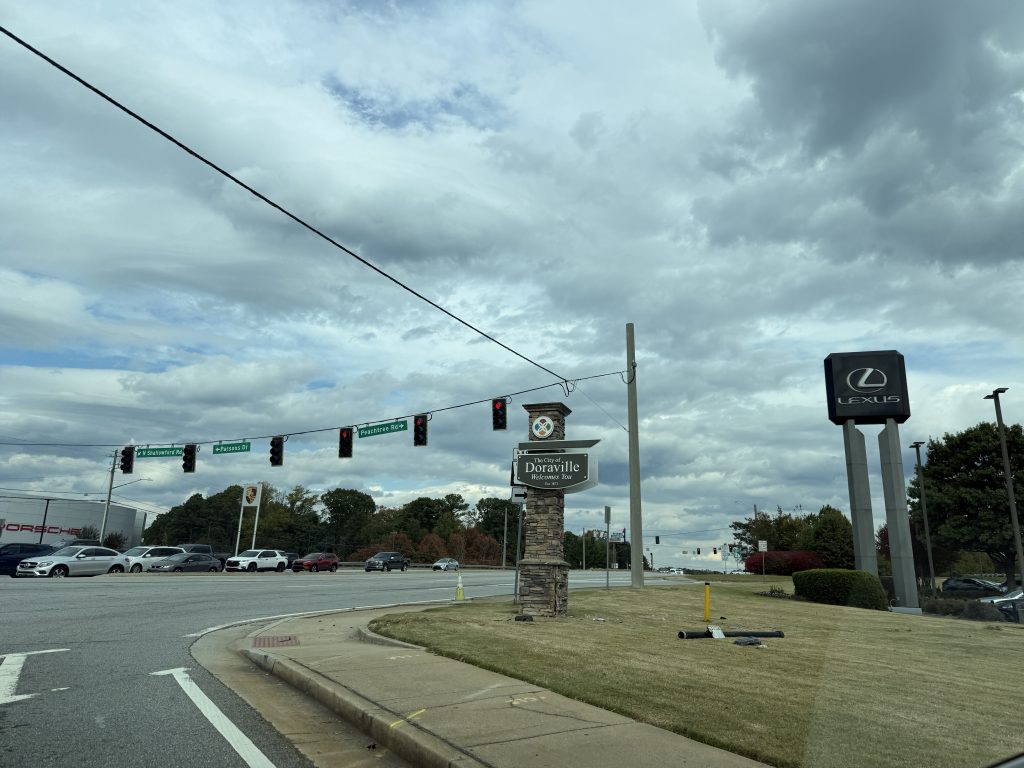
This is Doraville, Georgia.

This is Koreatown, located at 6035 Peachtree Rd.

These are Kumon, Sooni, and Tommi, located at 6035 Peachtree Rd.

This is Koreatown, located at 6035 Peachtree Rd.

These are MICS Karaoke, and Kura Sushi Revolving Sushi Bar located at 6035 Peachtree Rd.

This is Miss Gogi, located at 6035 Peachtree Rd.

These restaurants are located at 6035 Peachtree Rd.

These restaurants are located at 6035 Peachtree Rd.

These restaurants are located at 6035 Peachtree Rd.

This is Shoya Izakaya, located at 6035 Peachtree Rd.

This is Shoya Izakaya, located at 6035 Peachtree Rd.

 EN
EN
 KO
KO